Imagine hand-flying a 70-ton jet through a narrow Himalayan valley or battling Atlantic crosswinds on a runway built over the ocean. In 2026, despite the arrival of AI-enhanced flight decks and advanced automation, the “human factor” remains the ultimate safety net. Some runways simply cannot be conquered by a computer alone.
These “Category C” airports are the ultimate test of a pilot’s skill, requiring specialized certification and nerves of steel. Let’s look at why these legendary approaches remain the gold standard of airmanship this year.

1. Madeira (FNC): The Wind Shear Challenge
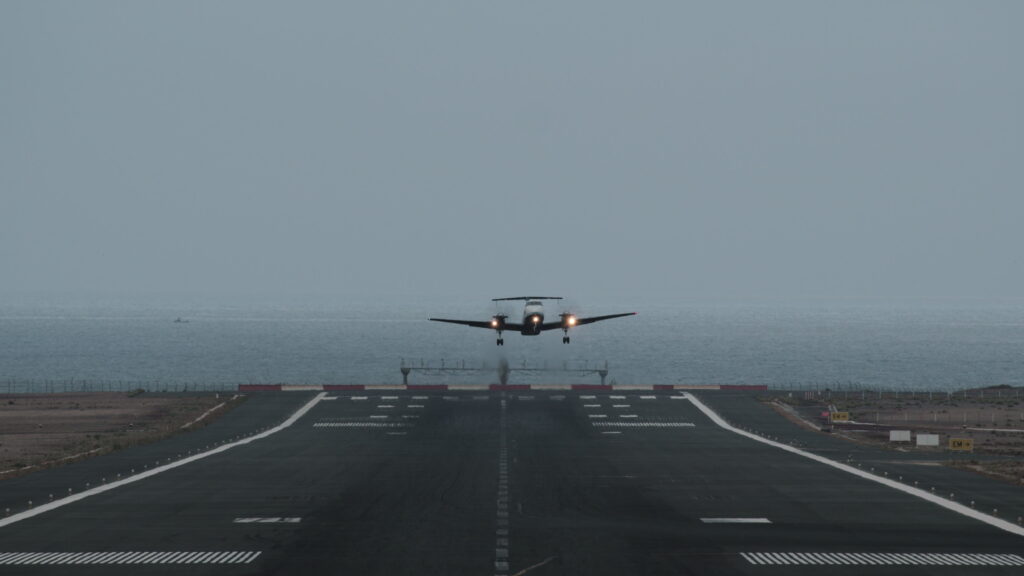
Funchal’s airport is famous for its runway built on stilts, but the real enemy is the invisible air.
· The Problem: Nestled between high mountains and the ocean, the airport is a hotbed for severe turbulence. Pilots often have to fly a curved approach, lining up with the runway at the very last moment.
· The Training: This level of precision is exactly what student pilots begin to study when mastering the complex ATPL subjects related to meteorology and aerodynamics.
2. Paro, Bhutan (PBH): The Himalayan Maze
Paro remains one of the few places on Earth where an airliner must be flown purely by visual reference through deep valleys.
· The Difficulty: Only a handful of pilots globally are certified to land here. There is no ILS; it’s a high-stakes game of “follow the river” until the runway appears.
· The Foundation: This “hands-on” flying skill is something many modern pilots first develop during their initial training. Many successful candidates started by using online pilot training to build a strong theoretical foundation before ever touching a real yoke.

3. London City (LCY): The Steep Descent
In the heart of the UK’s capital, London City requires a 5.5-degree glide path—nearly double the standard 3 degrees.
· Why it’s hard: It requires specialized aircraft certification to manage the rapid descent without gaining too much airspeed on a very short runway.
· Preparation: Pilots often use high-fidelity flight simulation and video games to practice the unique “flare” required for such a steep approach.
4. Where Technology Meets the Human Limit
Whether it’s the invisible wind shear of Madeira or the razor-sharp mountain ridges of Bhutan, these airports prove that even in 2026, technology is an aid, not a replacement. Mastering these challenges is the ultimate test of airmanship, requiring a level of precision that no autopilot can fully replicate. To bridge this gap, modern aviation is turning to new tools; today, pilots prepare for these extreme landings using high-tech environments, as AI and VR are reshaping pilot training worldwide. After all, at Paro or Funchal, your ability to adapt to the unexpected is your greatest asset.
Conclusion: The Elite Standard
In 2026, being a pilot is about more than just managing systems; it’s about having the skills to take over when the environment gets tough. “Category C” airports remind us that at the end of the day, aviation is an art form backed by rigorous science.