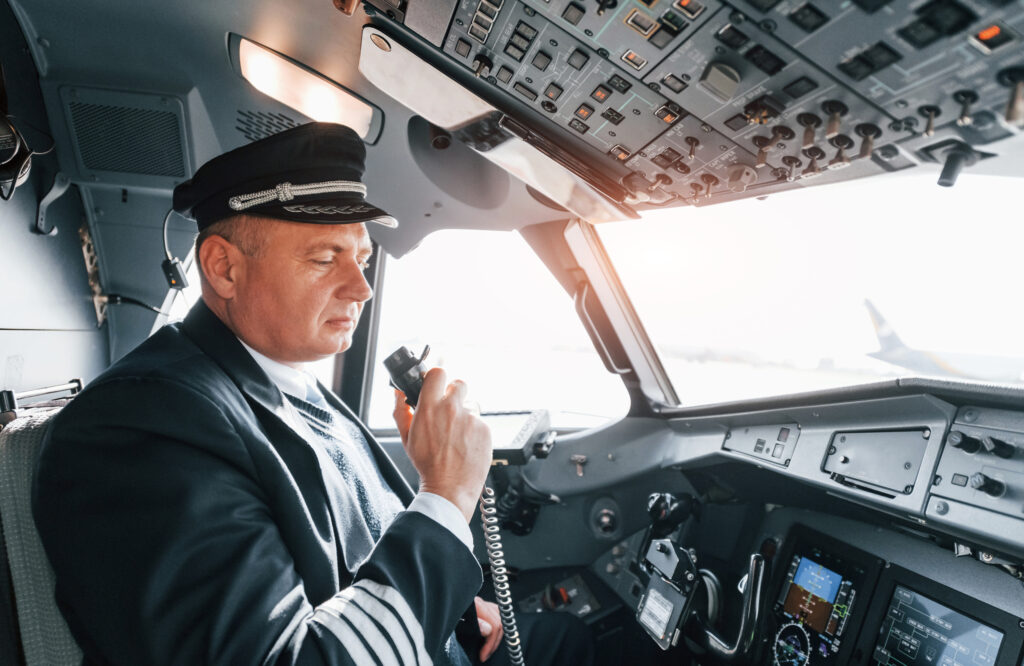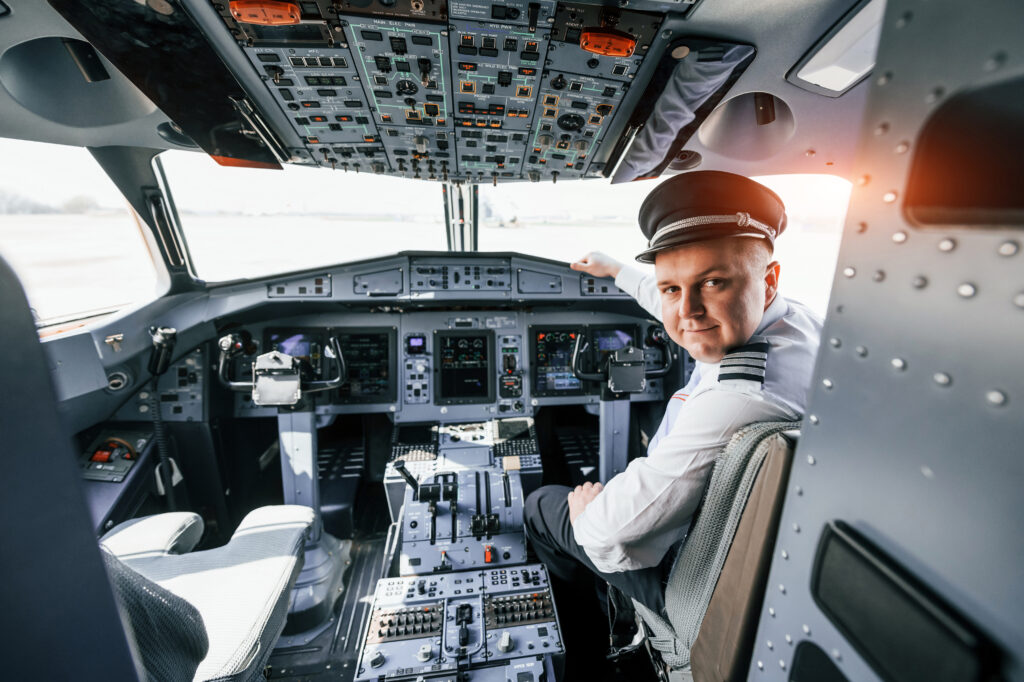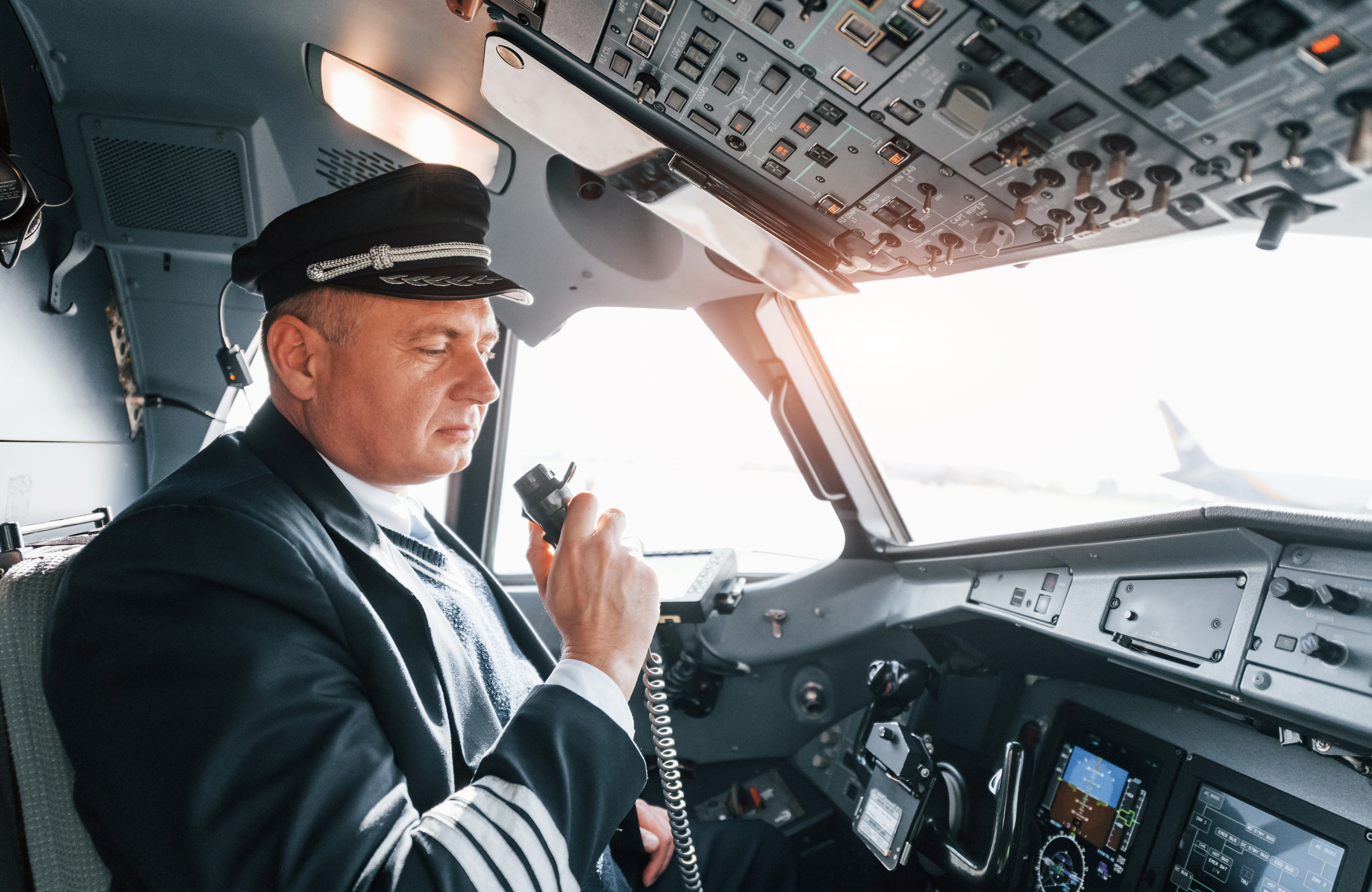
Like any profession, aviation has its own way of communicating—and pilot slang blends precision, history, and humor into a language that keeps the skies safe.
Whether you’re curious about what pilots say or looking to understand aviation terms, this guide will walk you through it.
Let’s break down pilot slang, common aviation phrases, and the language of the cockpit.
The Pilot Language Alphabet
The aviation alphabet used in pilot slang follows standardized ICAO phonetic codes, where each letter is assigned a distinct word—Alpha, Bravo, Charlie, Delta, Echo, Foxtrot, and so on through Zulu.
Numbers are also adapted for clarity: “three” becomes “tree,” “five” becomes “fife,” and “nine” becomes “niner,” while “zero” remains unchanged.
These conventions are designed to reduce misunderstandings over radio communication. In noisy conditions, letters like “B” and “P” can easily be confused, but “Bravo” and “Papa” remain clear and distinct.
This system forms the foundation of aviation English worldwide, ensuring that communication between pilots and air traffic control stays precise and reliable.
Pilot Slang: Words You’ll Hear Every Day
Pilot slang is the everyday language of the cockpit. If you’ve ever wondered what do pilots say, here are some common examples:
- Roger – Message received and understood. A classic example of pilot slang meaning “I got it.”
- Wilco – Short for “will comply.” You’ve heard the instruction and you’ll follow it.
- Squawk – Set your transponder code. Pilot slang at its most functional.
- Heavy – An aircraft with maximum takeoff weight over 300,000 pounds. Requires extra separation.
- Greaser – A landing so smooth you barely feel it.
Pilot Language on the Radio
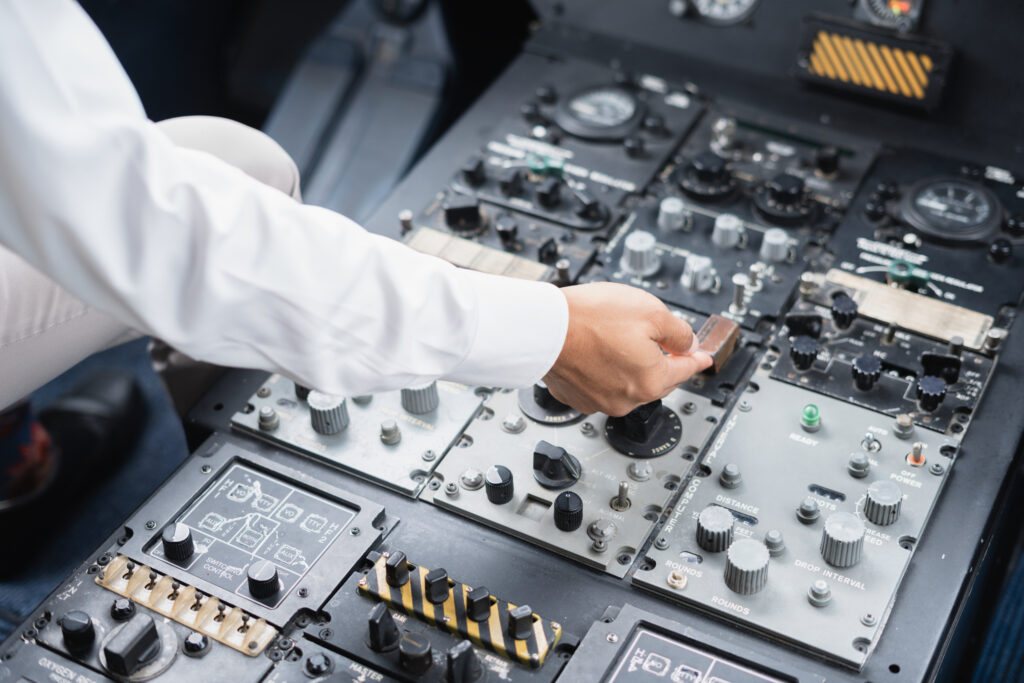
In pilot language, communication must be clear and concise, especially over the radio. That’s why aviation language relies on standardized aviation phraseology—a set of precise aviation phrases and terms used worldwide.
The Pilot/Controller Glossary is the official source. Here are key aviation phrases and terms:
- Affirmative – Yes
- Negative – No
- Stand by – Wait
- Say again – Repeat
- Read back – Confirm by repeating
- Unable – Cannot comply
Student pilots simply say “student pilot” to get extra support from ATC. For example:
“Dayton Tower, Fleetwing 1234, student pilot.”
This simple aviation English example shows how effective aviation language code keeps communication safe and efficient.
Aviation Terms Around the Airport
Some pilot slangs start right at the gate. These informal aviation terms often describe everyday situations around the airport:
- Gate lice – Passengers crowding the gate before boarding
- Blue juice – Aircraft lavatory fluid
- Crotch watch / groin scan – Seatbelt compliance check by crew
- Deadhead – Off-duty crew traveling as passengers
- Crosscheck – Crew verification of completed tasks
- All-call – Crew-wide communication with the cockpit
These expressions are part of informal aviation language, often shared between pilots and cabin crew.
What Do Pilots Say in the Air?
Once airborne, communication becomes a steady stream of clear, standardized calls mixed with everyday pilot slang.
Frequently used aviation terms include:
- VFR / IFR – Visual vs. instrument flying conditions
- Traffic at your two o’clock, five miles – Another aircraft slightly to your right, five miles away
- Squawk VFR (1200) – Standard transponder code for visual flight
- Squawk standby – Temporarily disable altitude reporting
- Radar contact – ATC has identified you on radar
- Radar service terminated – Flight following is ending or being transferred
- Holding pattern – Circling in a set path while awaiting clearance
- Final approach – Lined up with the runway, ready to land
- Go around – Abort landing and try again
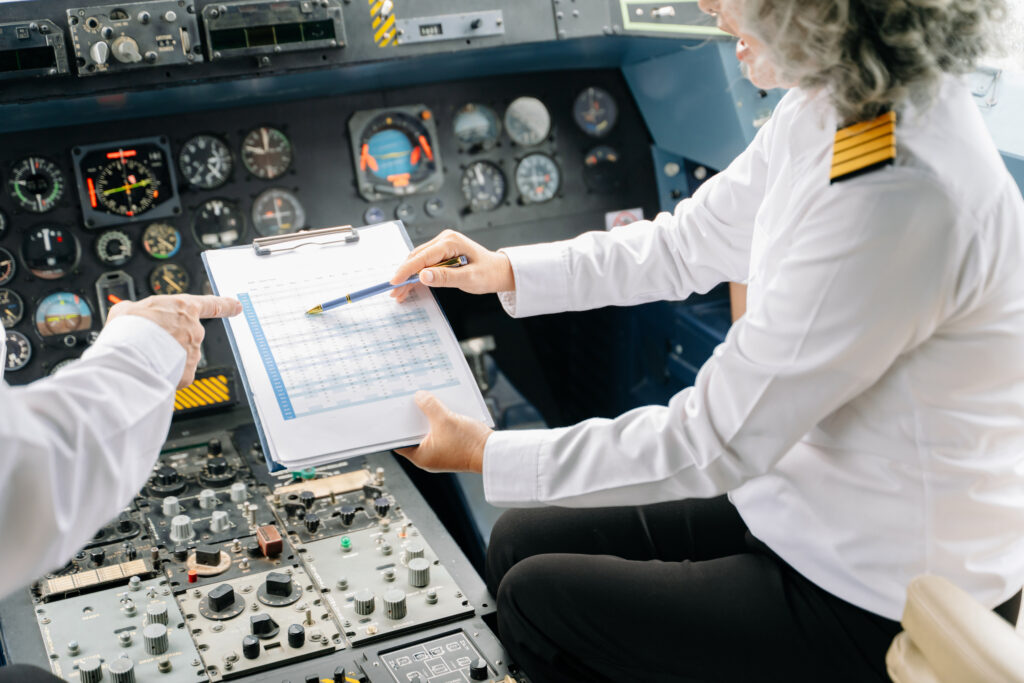
Pilot Slang in the Cockpit
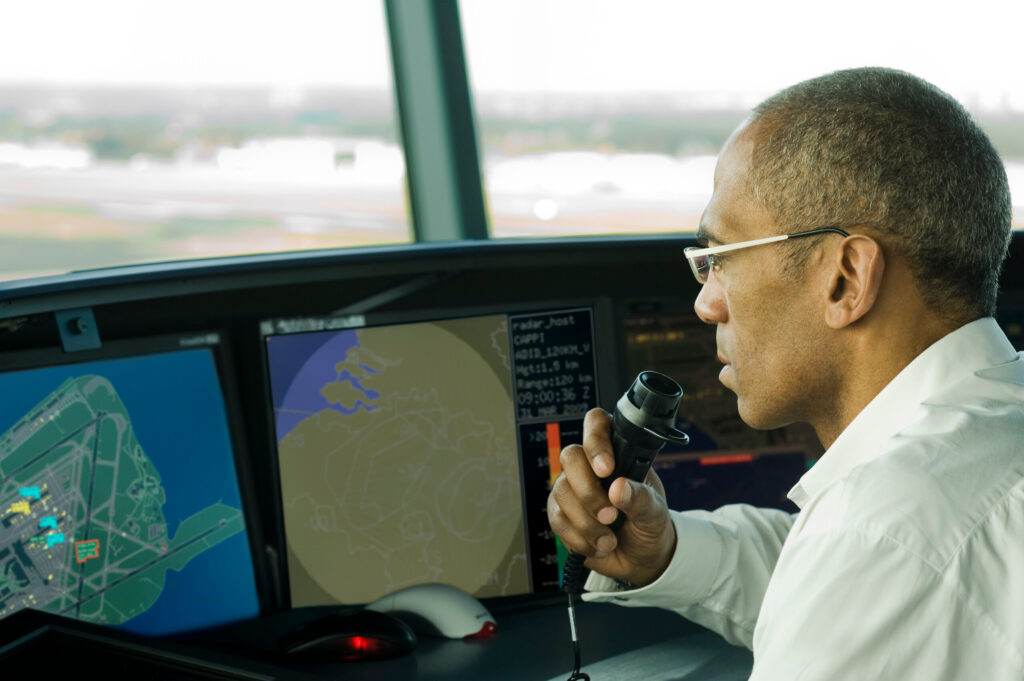
Some common pilot slang words you might hear include:
- George – The autopilot, taking over when workload increases
- Clean / Dirty – Aircraft configuration (gear and flaps up or down)
- The numbers – Runway markings pilots aim to touch down on
- Greaser – An exceptionally smooth landing
- Ballooning – When the aircraft rises again during landing due to over-flaring
Beyond aircraft handling, pilot slang meaning also reflects aviation culture:
- The $100 hamburger – Flying somewhere just for the experience, not the destination
- Hangar flying – Sharing stories, lessons, and experiences after the flight
Developing confidence in pilot language takes practice, especially when it comes to communication and decision-making in the cockpit—an area where many pilots initially face challenges and build confidence over time.
Essential Aviation Terms and Definitions
Key aviation terminology includes:
- V1 – The takeoff decision speed; after this point, the aircraft must continue the takeoff
- Rotate – The moment you lift the nose off the runway
- V2 – The minimum safe climb speed after an engine failure
- Mayday – The international distress call, repeated three times in emergencies
- Minimum fuel – Indicates limited fuel with little tolerance for delay
- Pilot’s discretion – ATC allows the pilot to choose climb or descent rate
Mastering these concepts is key to understanding both aviation meaning and the real-world use of aviation language code.
Many student pilots underestimate their importance, which can lead to avoidable errors early on.
Key Takeaways
Aviation terminology isn’t about sounding cool (though it does). It’s about clarity when clarity matters most. The right word at the right time keeps everyone safe, the frequency clear, and the flight on track.
Learn the language. Use it well. And when you hear “nice greaser” after your landing, you’ll know you’ve earned it.